Mindful Living · Tea Spa Journal
Who taught us that rest was lazy?

Think back to your childhood. It’s Saturday morning. The sun has barely risen, your blankets are warm, and for once, you don’t have to rush to school.
Then comes the familiar sound of a parent’s voice.
"Get up! It’s almost eight!"
Perhaps you were told that successful people wake up early. That sleeping too much was a sign of laziness. That there was always something useful you could be doing instead. Therefore, you got up. You made your bed, cleaned your room, helped around the house, and learned a lesson that would follow you long after childhood: Doing something was good. Doing nothing was questionable.
Years later, you’re an adult with a job, bills, responsibilities, and a calendar that never seems to empty, and somehow, even when you finally have permission to rest, you still hear that voice.
Shouldn’t you be doing something?
But where did that voice come from? More importantly, when did we start believing it?
The Lessons we didn’t know we were learning
For many of us, childhood was where our relationship with productivity began.
We were taught to work hard, respect our responsibilities, and make good use of our time. These are valuable lessons, often passed down by parents and grandparents who understood the importance of discipline and perseverance.
But somewhere along the way, some of us absorbed another message: being busy meant being responsible, waking up late meant wasting the day, and sitting quietly while others worked meant we weren’t doing enough. Of course, not every childhood was like this, and encouraging children to develop good habits is not the same as teaching them to fear rest. However, when rest is consistently treated as something to be justified, it’s possible to carry that expectation into adulthood. We may eventually move out of our childhood homes yet continue enforcing the same rules on ourselves.
Being busy somehow became a badge of honor
As adults, the pressure doesn’t disappear: It simply changes. In the workplace, we admire dedication, ambition, and the willingness to go the extra mile. We ask people how they’ve been, and one of the most familiar answers is, "Busy!" Sometimes, we say it with exhaustion. Other times, with a hint of pride. There’s nothing wrong with taking pride in hard work. Meaningful work can provide purpose, satisfaction, and a sense of accomplishment. But problems can arise when being constantly occupied becomes the measure of a successful life. We begin postponing rest until the next project is finished, the next deadline is met, or the next responsibility is handled.
Then another project arrives.
Another deadline approaches.
And rest is postponed again.
Somewhere in this cycle, we may begin confusing a full schedule with a fulfilling life. However, are they really the same?
We can spend an entire day accomplishing tasks and still feel as though we’ve missed something important. A conversation with someone we love, a nourishing meal, a moment of laughter, the simple pleasure of being present without worrying about what comes next. Perhaps making good use of our time isn’t always about how much we accomplish, but also about how deeply and fully we experience the moments we’re given, because when we find that sense of inner abundance, of fulfillment and peace within ourselves, we no longer need constant achievements to feel worthy.
The Social Media effect: Everyone else is doing more
But then there’s social media.
You open your phone on a Sunday afternoon. Someone has already completed a morning workout, prepared meals for the week, cleaned their apartment, read twenty pages of a book, and started a side business. Meanwhile, you’re still in your pajamas. Suddenly, the peaceful afternoon you were enjoying doesn’t feel quite so peaceful anymore. Of course, social media can be inspiring. It can introduce us to new ideas, healthier habits, and communities that encourage personal growth. But it also gives us countless opportunities to compare our ordinary moments with someone else’s carefully selected highlights.
Even self-care can become another performance. We see elaborate morning routines, perfectly arranged journals, expensive wellness products, and meticulously scheduled relaxation rituals. Without realizing it, we may begin to believe that even resting must be done correctly. Does peace need to be photographed, documented, or transformed into an accomplishment to be meaningful? Sometimes, a quiet afternoon is simply a quiet afternoon, and that’s enough.
What children can remind us about rest
There’s something fascinating about watching a tired child. A young child may become sleepy in the middle of an afternoon, curl up on the couch, and drift off without wondering whether they’ve accomplished enough to deserve it. Of course, children don’t always recognize when they need rest, and many resist bedtime with impressive determination. But their relationship with rest can remind us of something simple.
Tiredness is not a moral failure.
We don’t need to prove that we’ve worked hard enough to deserve sleep. We don’t need to complete a checklist before acknowledging exhaustion. We don’t need to feel ashamed of having physical and emotional limits. Somewhere between childhood and adulthood, many of us became skilled at ignoring those limits.
What science tells us about rest
Rest is not simply a pleasant interruption in an otherwise productive life. Adequate sleep supports memory, attention, emotional regulation, and physical health. The Centers for Disease Control and Prevention recommends that most adults between 18 and 60 years old get at least seven hours of sleep each night.
Stress management also matters.
According to the National Institute of Mental Health, taking care of mental health can include making time for relaxing activities, maintaining healthy sleep habits, and setting realistic priorities. Relaxation practices such as deep breathing and mindfulness may help some people manage stress. None of this means that taking a nap will solve every problem or that rest can replace medical care when someone is experiencing persistent exhaustion.
However, the benefits of rest extend beyond helping us return to work feeling refreshed. When we’re well-rested, we may find it easier to think clearly, engage with others, and enjoy the experiences that make life meaningful. We have more opportunities to be present with the people we love, pursue interests that bring us joy, and reflect on what truly matters to us. Rest isn’t simply preparation for the next responsibility. It’s also part of the life we’re working so hard to build.
Unlearning the Guilt
So how do we begin changing a belief we’ve carried for years?
Perhaps the first step is recognizing it. The next time you feel guilty for resting, ask yourself:
Who taught me that I always need to be doing something?
Was it an expectation you grew up with? A workplace where taking breaks was discouraged? A habit of comparing yourself with people who seem to accomplish more? Or simply a belief you’ve repeated for so long that it now feels like the truth?
Sometimes, the pressure to stay busy has less to do with the responsibilities in front of us and more to do with what we’ve come to believe about our worth. We may seek reassurance through accomplishments, approval, or the feeling of being needed. And while there’s nothing wrong with wanting to succeed, our value does not have to depend on how much we produce.
Perhaps part of learning to rest is discovering that we can feel fulfilled without constantly proving ourselves, that we can appreciate what we already have while working toward what we want, that a meaningful life isn’t measured only by achievements, but also by peace, connection, and joy we experience along the way.
You don’t have to reject ambition or abandon responsibility to develop a healthier relationship with rest. You can be hardworking and still need a break. You can be disciplined and still enjoy a slow morning. You can have goals and still recognize that not every hour needs to move you closer to achieving them.
Start small.
Enjoy your morning tea without checking your phone. Take a walk without counting steps. Allow yourself an afternoon without filling every available minute. When the familiar guilt appears, remember that learning to rest differently may take practice.
Making Peace With Slowing Down
At Tea Spa Wellness, our philosophy of Sharing Inner Peace begins with the belief that wellness deserves a place in everyday life, which may mean making time for a massage, a facial, or another peaceful wellness experience. It may also mean enjoying a few quiet moments at home, reconnecting with loved ones, or simply allowing yourself to pause.
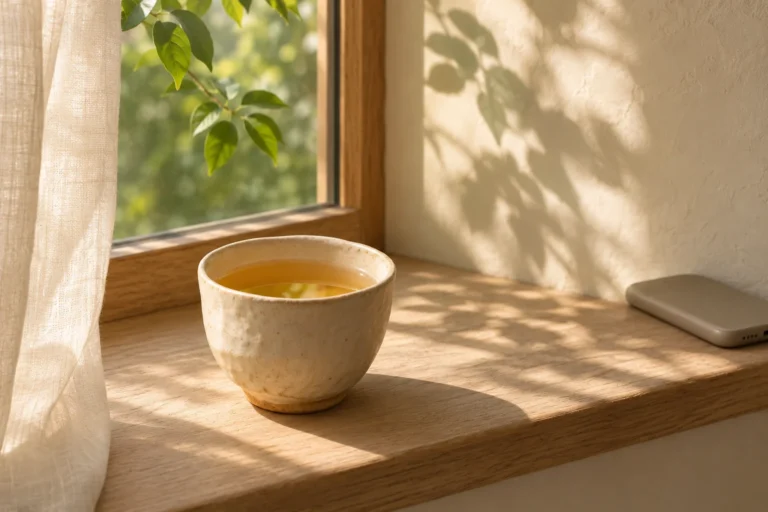
As we often say, there is no single right way to rest, and you don’t have to turn relaxation into another responsibility. Perhaps the next time you find yourself enjoying a slow morning, you can resist the urge to apologize for it. Let the sunlight fill the room. Let your tea stay warm between your hands. Let the world continue moving without requiring you to keep pace with it every second. After all, what is the purpose of working hard if we never give ourselves the opportunity to enjoy the life we’re creating?
The lessons we learned growing up can shape us, but they don’t have to define every choice we make. Hard work is a virtue, but rest is not a vice.